RFID for Retail: 5 Steps to a Successful Inventory Visibility Pilot

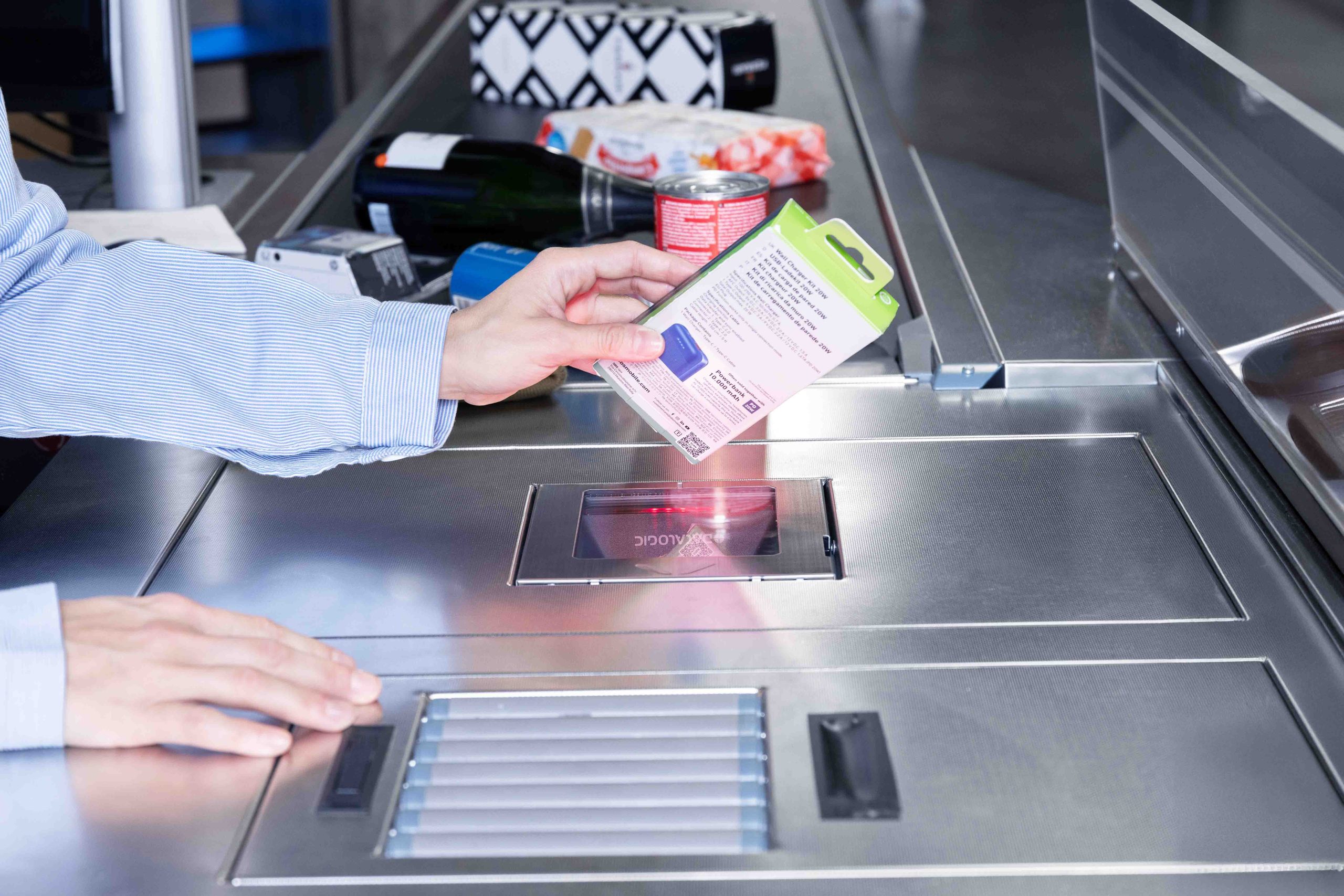
Scanning product with the Magellan 3700

Why RFID, and Why Now

Retailers today are under constant pressure to reduce stockouts, minimise shrinkage, and give customers a seamless shopping experience — whether in-store or online. Traditional barcode scanning, while reliable, requires line-of-sight and item-by-item scanning, which limits how quickly and accurately inventory can be counted. RFID (Radio-Frequency Identification) changes that equation entirely, allowing hundreds of items to be read simultaneously without direct scanning, giving retailers real-time, granular visibility into stock levels across the store, warehouse, and supply chain.

But a full-scale RFID rollout is a significant investment — which is why most successful implementations start with a well-structured pilot. A pilot allows retailers to test RFID’s impact on inventory accuracy, validate the technology in their specific environment, and build a business case before scaling. Here’s how to do it right.

Step 1: Define Clear Objectives and Success Metrics

Before selecting any hardware or tags, retailers need to be clear on what the pilot is meant to prove. Is the goal to improve inventory accuracy, reduce out-of-stocks, speed up cycle counts, or enhance loss prevention? Each objective points to different metrics — for example, inventory accuracy improvement is typically measured by comparing RFID-based cycle counts against physical counts, while out-of-stock reduction is measured through on-shelf availability rates. Setting these benchmarks upfront ensures the pilot produces data that can genuinely justify — or refine — a wider rollout.

Step 2: Select the Right Pilot Scope

Rather than tagging an entire store or category range, successful pilots typically start narrow — a single high-value category, a specific store location, or a defined section of the supply chain (such as receiving and putaway). This focused scope makes it easier to isolate RFID’s impact, manage costs, and troubleshoot issues without disrupting broader operations. Categories with high shrinkage, frequent stockouts, or complex SKU variations (like apparel with multiple sizes and colours) tend to show the clearest, fastest ROI during a pilot.

Step 3: Choose Standards-Based Tags and Technology
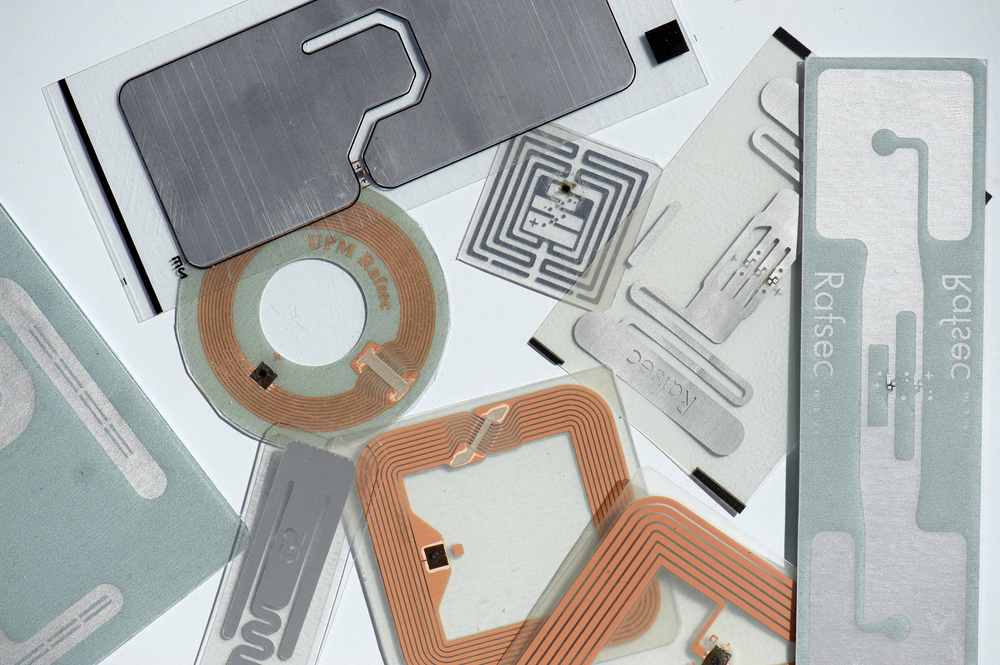
Various RFID tag

Not all RFID tags and readers are created equal, and interoperability matters — especially for retailers working across multiple suppliers, distribution centres, or eventually, industry-wide traceability initiatives. Adopting GS1-standard RFID tags, encoded with GTINs via EPC (Electronic Product Code) standards, ensures that tagged inventory remains readable and meaningful across different systems and trading partners, both now and as the pilot scales. This is also the point to decide between passive and active tags, and to select handheld readers, fixed readers, or a combination, based on the pilot’s specific use case.

Step 4: Execute the Pilot and Train Your Team

With scope and technology defined, the pilot moves into execution — tagging inventory, installing readers, and integrating RFID data with existing inventory or POS systems. Just as important as the technology itself is the team running it. Staff need to understand how to use handheld readers, interpret RFID-driven inventory reports, and troubleshoot common issues like tag misreads or interference from metal shelving and liquids. A well-trained team is often the difference between a pilot that produces clean, trustworthy data and one that doesn’t.

Step 5: Measure Results and Build the Business Case for Scaling

Once the pilot has run for a sufficient period — typically 8 to 12 weeks, depending on the objective — it’s time to measure results against the benchmarks set in Step 1. This means comparing inventory accuracy before and after RFID, tracking any change in on-shelf availability or out-of-stock incidents, and calculating the labour time saved on cycle counts. These results form the foundation of the business case for a wider rollout, helping stakeholders see concrete evidence of ROI rather than a theoretical projection.

From Pilot to Full-Scale Visibility

A successful RFID pilot doesn’t just test technology — it builds organisational confidence and a repeatable playbook for scaling. Retailers who approach their pilot methodically, with clear objectives, the right scope, and standards-based tagging, are far better positioned to expand RFID across their operations and unlock the full value of real-time inventory visibility.


Scanning product with the Magellan 3700

Why RFID, and Why Now

Retailers today are under constant pressure to reduce stockouts, minimise shrinkage, and give customers a seamless shopping experience — whether in-store or online. Traditional barcode scanning, while reliable, requires line-of-sight and item-by-item scanning, which limits how quickly and accurately inventory can be counted. RFID (Radio-Frequency Identification) changes that equation entirely, allowing hundreds of items to be read simultaneously without direct scanning, giving retailers real-time, granular visibility into stock levels across the store, warehouse, and supply chain.

But a full-scale RFID rollout is a significant investment — which is why most successful implementations start with a well-structured pilot. A pilot allows retailers to test RFID’s impact on inventory accuracy, validate the technology in their specific environment, and build a business case before scaling. Here’s how to do it right.

Step 1: Define Clear Objectives and Success Metrics

Before selecting any hardware or tags, retailers need to be clear on what the pilot is meant to prove. Is the goal to improve inventory accuracy, reduce out-of-stocks, speed up cycle counts, or enhance loss prevention? Each objective points to different metrics — for example, inventory accuracy improvement is typically measured by comparing RFID-based cycle counts against physical counts, while out-of-stock reduction is measured through on-shelf availability rates. Setting these benchmarks upfront ensures the pilot produces data that can genuinely justify — or refine — a wider rollout.

Step 2: Select the Right Pilot Scope

Rather than tagging an entire store or category range, successful pilots typically start narrow — a single high-value category, a specific store location, or a defined section of the supply chain (such as receiving and putaway). This focused scope makes it easier to isolate RFID’s impact, manage costs, and troubleshoot issues without disrupting broader operations. Categories with high shrinkage, frequent stockouts, or complex SKU variations (like apparel with multiple sizes and colours) tend to show the clearest, fastest ROI during a pilot.

Step 3: Choose Standards-Based Tags and Technology

Various RFID tag

Not all RFID tags and readers are created equal, and interoperability matters — especially for retailers working across multiple suppliers, distribution centres, or eventually, industry-wide traceability initiatives. Adopting GS1-standard RFID tags, encoded with GTINs via EPC (Electronic Product Code) standards, ensures that tagged inventory remains readable and meaningful across different systems and trading partners, both now and as the pilot scales. This is also the point to decide between passive and active tags, and to select handheld readers, fixed readers, or a combination, based on the pilot’s specific use case.

Step 4: Execute the Pilot and Train Your Team

With scope and technology defined, the pilot moves into execution — tagging inventory, installing readers, and integrating RFID data with existing inventory or POS systems. Just as important as the technology itself is the team running it. Staff need to understand how to use handheld readers, interpret RFID-driven inventory reports, and troubleshoot common issues like tag misreads or interference from metal shelving and liquids. A well-trained team is often the difference between a pilot that produces clean, trustworthy data and one that doesn’t.

Step 5: Measure Results and Build the Business Case for Scaling

Once the pilot has run for a sufficient period — typically 8 to 12 weeks, depending on the objective — it’s time to measure results against the benchmarks set in Step 1. This means comparing inventory accuracy before and after RFID, tracking any change in on-shelf availability or out-of-stock incidents, and calculating the labour time saved on cycle counts. These results form the foundation of the business case for a wider rollout, helping stakeholders see concrete evidence of ROI rather than a theoretical projection.

From Pilot to Full-Scale Visibility

A successful RFID pilot doesn’t just test technology — it builds organisational confidence and a repeatable playbook for scaling. Retailers who approach their pilot methodically, with clear objectives, the right scope, and standards-based tagging, are far better positioned to expand RFID across their operations and unlock the full value of real-time inventory visibility.

Get FREE updates on GS1 Singapore, Standards Development and News!

Select your preferred industry news and check your inbox in the next 30 minutes!