From Creation to Customer: The Journey of a Product Tag

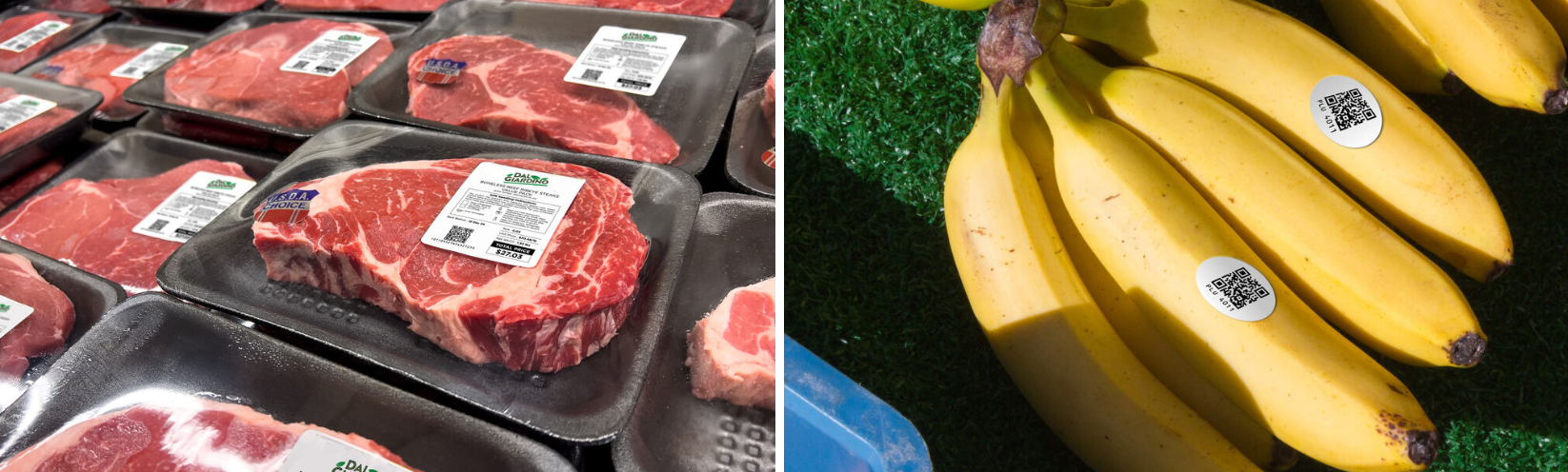
food with product tag

Every product’s journey begins long before it reaches a store shelf — and product tags start working from the very first step. At the point of manufacturing, a barcode or tag is often assigned a unique identifier, such as a Global Trade Item Number (GTIN), which distinguishes that product from every other item in the market. This single identifier becomes the thread that connects the product to a shared language of data, used consistently by manufacturers, distributors, retailers and, increasingly, consumers.

As the product moves through the supply chain, that same tag continues to add value. During transportation and warehousing, barcodes and RFID tags enable fast, accurate tracking of inventory — reducing manual errors, speeding up receiving processes, and giving businesses real-time visibility into stock levels across multiple locations. Serial Shipping Container Codes (SSCC), for example, allow entire pallets or shipments to be tracked as a single unit, streamlining logistics at scale.

At the point of sale, product tags shift from a logistics tool to a customer-facing one. A quick scan at checkout retrieves pricing and product information instantly, but that’s only the surface. With next-generation formats like GS1 DataMatrix — a 2D barcode — a single scan can also unlock batch numbers, expiry dates, and even links to digital content such as usage instructions, sustainability information, or promotional campaigns. This is where product tags evolve from purely operational tools into platforms for customer engagement.

Preparing for the Next Generation of Product Tags

As global industries move toward 2D barcodes ahead of the 2027 migration deadline, the role of product tags is set to expand even further. Where traditional 1D barcodes could only carry a limited string of numbers, 2D barcodes can hold significantly more data — enabling richer traceability, more transparent supply chains, and new opportunities for brands to connect directly with consumers through a single scan.

For businesses, this means product tags are no longer just about getting a product through checkout. They’re becoming a strategic asset — one that supports operational efficiency today while laying the groundwork for smarter, more connected supply chains tomorrow.


food with product tag

Every product’s journey begins long before it reaches a store shelf — and product tags start working from the very first step. At the point of manufacturing, a barcode or tag is often assigned a unique identifier, such as a Global Trade Item Number (GTIN), which distinguishes that product from every other item in the market. This single identifier becomes the thread that connects the product to a shared language of data, used consistently by manufacturers, distributors, retailers and, increasingly, consumers.

As the product moves through the supply chain, that same tag continues to add value. During transportation and warehousing, barcodes and RFID tags enable fast, accurate tracking of inventory — reducing manual errors, speeding up receiving processes, and giving businesses real-time visibility into stock levels across multiple locations. Serial Shipping Container Codes (SSCC), for example, allow entire pallets or shipments to be tracked as a single unit, streamlining logistics at scale.

At the point of sale, product tags shift from a logistics tool to a customer-facing one. A quick scan at checkout retrieves pricing and product information instantly, but that’s only the surface. With next-generation formats like GS1 DataMatrix — a 2D barcode — a single scan can also unlock batch numbers, expiry dates, and even links to digital content such as usage instructions, sustainability information, or promotional campaigns. This is where product tags evolve from purely operational tools into platforms for customer engagement.

Preparing for the Next Generation of Product Tags

As global industries move toward 2D barcodes ahead of the 2027 migration deadline, the role of product tags is set to expand even further. Where traditional 1D barcodes could only carry a limited string of numbers, 2D barcodes can hold significantly more data — enabling richer traceability, more transparent supply chains, and new opportunities for brands to connect directly with consumers through a single scan.

For businesses, this means product tags are no longer just about getting a product through checkout. They’re becoming a strategic asset — one that supports operational efficiency today while laying the groundwork for smarter, more connected supply chains tomorrow.

Get FREE updates on GS1 Singapore, Standards Development and News!

Select your preferred industry news and check your inbox in the next 30 minutes!